How to Have More Vivid Dreams: 5 Techniques I Use Every Night
For years, my dreams were like static on an old television—I knew something was playing, but I couldn't make out the picture. I'd wake up with a vague sense that I'd dreamed, maybe a flash of color or a lingering emotion, but nothing I could hold onto. That changed when I stopped treating vivid dreams as something that just happens to lucky people and started treating dream vividness as a trainable skill.
Quick Answer: Vivid dreams happen during REM sleep when your brain is most active, and most people don't have them consistently because their sleep habits, evening routines, and morning practices work against dream formation. You can increase dream vividness by changing what you do before bed, how you wake up, and how you engage with your dreams during the day.
The five factors that determine dream vividness:
1. REM sleep quality — longer, uninterrupted REM cycles produce more detailed dreams
2. Pre-sleep priming — what you feed your mind in the hour before bed shapes dream content
3. Morning capture timing — the first 90 seconds after waking determine whether you remember anything
4. Consistent practice — your brain learns to prioritize dream formation when you pay attention to it
5. Daytime awareness — how present you are during the day directly affects how vivid your dreams become
This is exactly why I structured Lunar Insight around both evening intention-setting and morning capture. When I designed the facing-page layout, I was solving this exact problem for myself—I needed a system that worked with my brain's natural rhythms instead of against them. Let me walk you through what actually increases dream vividness.
Why Some People Have Vivid Dreams and Others Don't
Dream vividness isn't genetic luck—it's a combination of sleep architecture and attention.
During REM sleep, your brain is nearly as active as when you're awake. Your visual cortex fires, your emotional centers light up, and your prefrontal cortex—the part responsible for logical thinking—goes partially offline. This is why dreams feel so real while you're in them and so strange once you wake up.
The key factor most people miss: REM cycles get longer as the night progresses. Your first REM period might last only 10 minutes. By your final sleep cycle, it can stretch to 45-60 minutes. This means your most vivid, detailed dreams happen in the last two hours of sleep—which is exactly when most people's alarm clocks cut them short.
I noticed this pattern in my own practice years before I understood the science. On weekends, when I woke naturally, my dreams were rich and detailed. On weekdays, when my alarm jolted me awake at 6 AM, I remembered almost nothing. The dreams weren't absent—I was just interrupting them.
But sleep timing is only part of the equation. The other half is attention. Your brain produces dreams every single night—multiple times per night. The difference between someone who "never dreams" and someone who has vivid dreams nightly isn't brain chemistry. It's whether they've trained their brain to treat dreams as worth remembering.
This is what researchers call the "dream recall attitude effect." When you consistently pay attention to your dreams—writing them down, thinking about them, valuing them—your brain starts prioritizing dream memory formation. It's the same principle behind why you notice a specific car model everywhere after you buy one. The information was always there; your brain just wasn't flagging it.
I explain the full science behind why dreams fade so quickly in my guide on why you forget 95% of your dreams. Understanding the mechanism is the first step to changing it.
Key Insights: - REM cycles lengthen throughout the night—your most vivid dreams happen in the final 2 hours of sleep - Alarm clocks interrupt your longest REM cycles, destroying your best dreams - "Never dreaming" is almost always a recall problem, not a dream production problem - Paying consistent attention to dreams trains your brain to prioritize dream memory
Put It Into Practice: - Push your wake time 20-30 minutes later, even twice a week, to capture longer REM cycles - Before sleep tonight, tell yourself: "I will remember my dreams when I wake up" - Notice how your dream recall differs on days you wake naturally versus alarm days
Key Insights
- ✦REM sleep cycles get progressively longer—final cycles produce the most vivid dreams
- ✦Alarm clocks interrupt the richest dreaming period of the night
- ✦Dream recall is a trained attention skill, not an innate ability
- ✦The 'dream recall attitude effect' means valuing dreams increases vividness over time
Put It Into Practice
- →Protect your final sleep cycles by adjusting wake times when possible
- →Set the intention to remember dreams before falling asleep
- →Read the full explanation in Why You Forget 95% of Your Dreams to understand the memory mechanism

Person waking naturally at dawn in the liminal space between dreaming and waking
The Evening Prime: How to Set Your Brain Up for Vivid Dreams
What you do in the hour before sleep directly shapes what your brain does while you're dreaming. I call this the Evening Prime, and it's the single most underrated factor in dream vividness.
Here's why it matters: your brain doesn't shut off when you fall asleep. It shifts into processing mode, sorting through the day's experiences, emotions, and sensory input. Whatever is freshest in your mind gets the most processing time. If you fall asleep scrolling social media, your brain spends its dream cycles processing fragmented, low-value content. If you fall asleep after intentional reflection, your brain has richer material to work with.
My evening routine took months to develop, but the core is simple:
Step 1: Screen cutoff 45-60 minutes before bed. Blue light suppresses melatonin production, which shortens your REM cycles. But the bigger issue is content. Scrolling feeds your brain rapid, disconnected stimuli that fragment dream coherence. I replaced screens with reading or quiet conversation, and my dream clarity improved within the first week.
Step 2: Sensory wind-down. I dim the lights, light a specific candle I only use at night, and sometimes listen to ambient sound. This isn't about being mystical—it's about creating consistent sensory cues that tell your nervous system it's time to shift states. After months of this routine, the scent alone starts my body's sleep preparation.
Step 3: Dream intention setting. This is the technique that changed everything for me. Before I close my eyes, I spend 60 seconds on a single thought: "Tonight I want to notice my dreams." Not control them. Not lucid dream. Just notice. This gentle intention—without pressure or performance expectations—consistently produces more vivid results than any forced technique I've tried.
This three-step process is exactly what I built into Lunar Insight's evening pages. The right-side prompts aren't random reflection questions—they're specifically designed to prime your brain for richer dream activity. Each prompt asks you to notice something specific from your day: a texture, a conversation, a feeling that surprised you. This gives your dreaming brain concrete material to process, which increases both vividness and personal meaning.
If evening anxiety tends to crowd out your pre-sleep calm, the grounding techniques in my guide on evening practices for mental peace can help you settle your nervous system first.
Key Insights: - Your brain processes whatever is freshest before sleep—intentional input produces richer dreams - Screen content fragments dream coherence; replacing it with reflection increases vividness - Consistent sensory cues train your nervous system to prepare for deeper sleep - Gentle dream intention outperforms forced techniques every time
Put It Into Practice: - Tonight, set a phone alarm for 45 minutes before your target bedtime labeled "Evening Prime" - Replace the last screen session with 5 minutes of writing about one specific moment from your day - As you close your eyes, say once: "Tonight I want to notice my dreams"
Key Insights
- ✦Pre-sleep content directly shapes dream material and coherence
- ✦Screen cutoff 45-60 minutes before bed protects REM quality
- ✦Consistent sensory cues create automatic nervous system wind-down
- ✦Gentle intention-setting produces better results than forced lucid dreaming techniques
Put It Into Practice
- →Use Lunar Insight's evening prompts to feed your brain specific, reflective material before sleep
- →Create one consistent sensory anchor (scent, sound, texture) for your evening routine
- →If anxiety disrupts your evening calm, start with the grounding practices in the sleep guide

Evening journaling practice with herbal tea preparing the mind for vivid dreams
The 90-Second Window: How to Capture Dreams Before They Disappear
You can have the most vivid dream of your life and lose it completely within 90 seconds of waking up. I know because I've done it hundreds of times.
Here's what happens neurologically: when you wake up, your brain rapidly shifts from dream-state chemistry to waking-state chemistry. Norepinephrine—the neurotransmitter responsible for forming new memories—was suppressed during REM sleep. As it floods back in, it overwrites the fragile dream memories with waking priorities. Your brain essentially says: "That was sleep. This is real. Discard the sleep data."
Unless you intervene in that narrow window.
The technique I've refined over years is embarrassingly simple. I keep my journal on my pillow—not my nightstand, not across the room, on my pillow. When I wake, before I open my eyes fully, before I check my phone, before I even shift my body position, I reach for the journal and write. Sometimes it's three words. Sometimes it's three pages. The amount doesn't matter. The timing does.
Here's the detail most people miss: body position matters. When you shift positions—rolling over, sitting up—your brain interprets this as "we're done sleeping, activate daytime mode." Staying in the position you woke up in preserves dream state access for longer. I've recovered entire dream sequences just by keeping still and letting the images come back.
I developed what I call the Three-Word Anchor technique. Instead of trying to write a full narrative while half-asleep, I capture three words that represent the strongest dream images or feelings. "Red door. Running. Mom's kitchen." Later, when I'm fully awake, I read those three words and the full dream unfolds. The words act as retrieval cues, pulling the dream back from where it was fading.
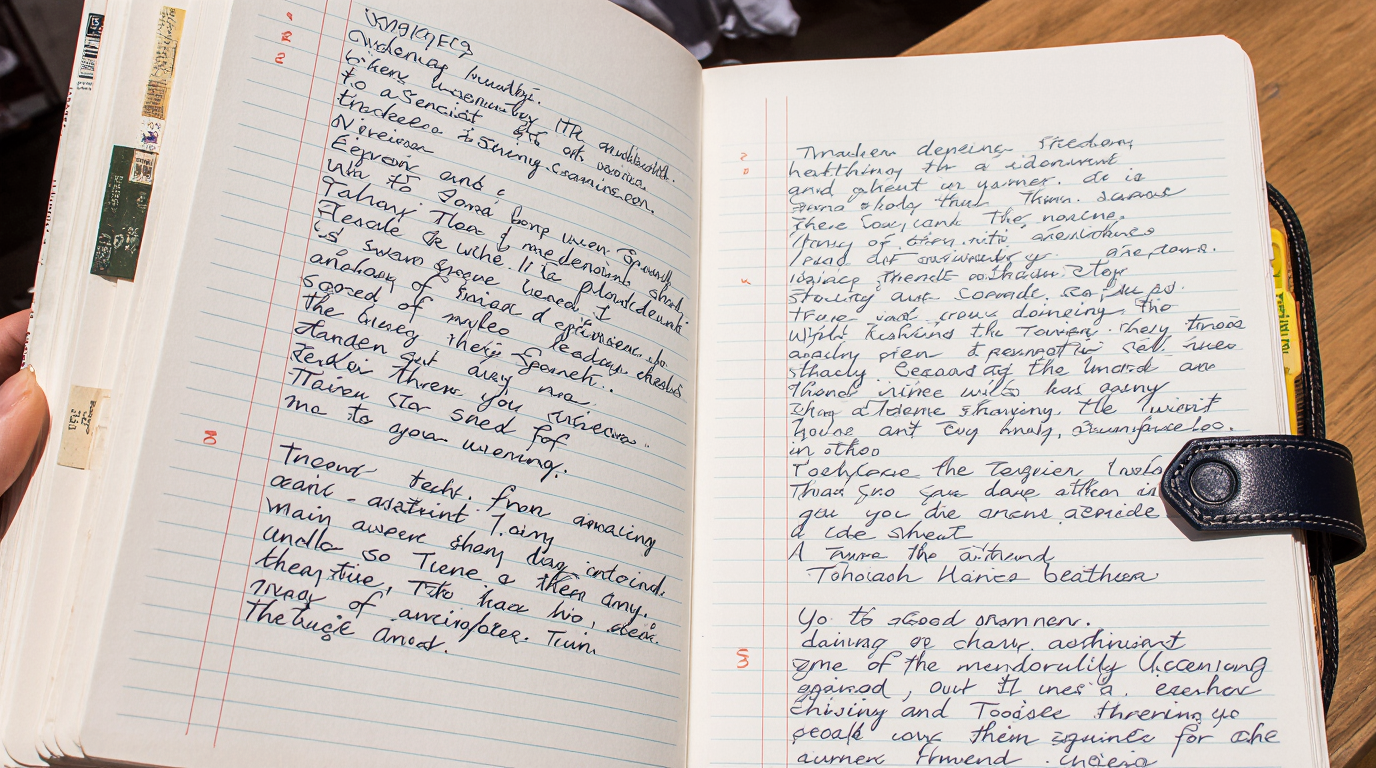
This is why I placed the morning capture page on the left side of Lunar Insight's facing-page spread. You open the journal, and the first thing you see is a simple prompt: "What feeling lingers from your dreams?" You can answer in three words. No pressure to recall a full narrative. Just capture the thread, and the rest follows.
For a deeper walkthrough of dream journaling methods, my guide on starting a dream journal covers the full setup process.
Key Insights: - Dream memories are neurologically fragile—norepinephrine floods them out within 90 seconds - Body position preservation extends dream state access - Three-word anchors work better than trying to write full narratives while groggy - Consistency matters more than volume—capturing something every morning trains recall
Put It Into Practice: - Move your journal to your pillow tonight—not the nightstand, the pillow - When you wake, don't move your body. Keep your eyes closed and let images surface - Write three words that capture the strongest dream impression before doing anything else
Key Insights
- ✦Norepinephrine suppression during REM makes dream memories uniquely fragile
- ✦The 90-second window is the critical capture period before waking chemistry takes over
- ✦Body position preservation extends access to dream state memories
- ✦Three-Word Anchor technique provides retrieval cues without requiring full recall
Put It Into Practice
- →Place journal on pillow, not nightstand, to eliminate reaching delay
- →Use the Three-Word Anchor method before attempting full dream narratives
- →Follow the complete dream journal setup in Start Your Dream Journal

Reaching for a dream journal on the pillow in the first moments after waking
Daytime Practices That Increase Dream Vividness at Night
This is the piece most dream guides leave out entirely: what you do during the day affects how vividly you dream at night.
The connection is attention. Your waking awareness and your dreaming awareness share the same neural pathways. When you move through your day on autopilot—same routine, same screens, same mental loops—your brain has less sensory material to process during sleep. Fewer inputs mean flatter, less detailed dreams.
I discovered this accidentally. During a particularly stressful month where I was barely present in my waking life, my dreams went nearly silent. When I started deliberately paying attention to sensory details during the day—the temperature of my coffee cup, the specific shade of blue in the sky, the texture of my dog's ear—my dreams came back in full color within days.
Researchers have found that people with higher "resting-state brain activity"—essentially, people who are more mentally engaged and aware during waking hours—consistently report more vivid dreams. This isn't about being constantly stimulated. It's about being present.
Here are three daytime practices that directly feed dream vividness:
The Sensory Check-In: Three times a day, I pause for 30 seconds and notice five specific sensory details in my environment. What do I hear? What textures am I touching? What do I smell? This practice builds the kind of detailed awareness that carries into dream construction. My dreams started including smell and texture—something they'd never done before—after two weeks of consistent check-ins.
The "Would I Notice?" Question: Throughout the day, I occasionally ask myself: "If this were a dream, would I notice something off?" This isn't a formal reality check for lucid dreaming—it's gentler than that. It's training my brain to evaluate my environment with curiosity rather than assumption. This habit of questioning directly translates to richer dream detail, because your brain starts rendering more complete environments.
The Creative Consumption Shift: I replaced 30 minutes of daily scrolling with reading fiction, looking at art, or listening to music without multitasking. Dreams are constructed from your brain's stored imagery and emotional associations. When your input is richer and more varied, your dream output follows. Some of my most vivid dreams have directly incorporated images from books I was reading or paintings I'd studied that week.
If you're interested in how dreams feed creativity in return, my piece on using dreams for creative work covers the full loop between waking creativity and dream content.
Key Insights: - Daytime awareness and dream vividness share the same neural pathways - Autopilot living produces flat, forgettable dreams—presence produces vivid ones - Sensory attention during the day teaches your brain to render richer dream environments - Creative consumption provides your brain with better raw material for dream construction
Put It Into Practice: - Set three daily reminders for a 30-second Sensory Check-In (notice 5 specific details) - Replace 30 minutes of scrolling with fiction, art, or focused music listening - Once today, pause and ask: "If this were a dream, what would seem off about this scene?"
Key Insights
- ✦Waking awareness and dream vividness are neurologically linked
- ✦Autopilot routines reduce sensory input available for dream construction
- ✦Sensory Check-Ins train the brain to include smell, texture, and detail in dreams
- ✦Creative consumption provides richer raw material for dream imagery
Put It Into Practice
- →Practice three daily Sensory Check-Ins to build the awareness that feeds vivid dreams
- →Shift 30 minutes of passive consumption to intentional creative input
- →Read Using Dreams for Creativity to understand the full awareness-to-dream loop

Practicing mindful awareness during the day to increase dream vividness at night
The 30-Day Vividness Protocol: Building the Habit That Sticks
Individual techniques help, but vivid dreaming becomes consistent only when you build a daily practice. I learned this the frustrating way—sporadic effort produced sporadic results. When I committed to 30 consecutive days of the full cycle (evening prime, morning capture, daytime awareness), my dream vividness improved permanently.
Here's what the 30-day progression typically looks like, based on my own experience and what readers of Lunar Insight have shared with me:
Days 1-7: The Resistance Phase. You'll forget to journal most mornings. You'll grab your phone before your notebook. Your dreams will seem absent or boring. This is normal. Your brain is still defaulting to its old pattern of discarding dream data. The only goal this week is consistency—capture something, even if it's "no recall today."
Days 8-14: The Fragment Phase. Dream fragments start appearing—emotions without scenes, colors without context, faces without names. This is your brain's recall system warming up. I remember this phase feeling frustrating because I could sense there was more, but I couldn't access it yet. Keep writing the fragments. They matter.
Days 15-21: The Vividness Surge. This is where it gets interesting. Most people report a noticeable jump in dream detail around the two-week mark. Dreams start including sensory information beyond just visual—sounds, textures, even tastes. You might wake up mid-dream and realize you were in the middle of a complete, coherent scene. This is the payoff for the first two weeks of patience.
Days 22-30: The Pattern Phase. Dream themes and symbols start repeating. You'll notice your brain has a vocabulary—specific images, settings, or characters that appear regularly. This is when dream work shifts from recall practice to genuine self-reflection. The patterns aren't random; they're your subconscious processing recurring thoughts, unresolved feelings, and things your waking mind hasn't addressed.
This four-phase progression is exactly why I structured Lunar Insight around a 30-day cycle. The daily prompts evolve with each phase—early prompts focus on simple capture ("What feeling lingers?"), middle prompts build pattern recognition ("Have you seen this image before?"), and later prompts invite interpretation ("What might your dreams be reflecting about your waking life?"). The structure does the thinking so you can focus on the practice.
One thing I want to be honest about: vivid dreaming isn't always pleasant. Around day 15-20, some people experience more intense emotional content—anxiety dreams, grief dreams, old memories surfacing. This is actually a sign the practice is working. Your brain is using the increased dream access to process material it's been storing. If this happens, it's worth sitting with rather than stopping. My guide on interpreting dream patterns can help you make sense of what surfaces.
For those who want to take the practice further into conscious dreaming, my beginner's guide to lucid dreaming builds on this same foundation.
Key Insights: - Consistent daily practice produces permanent changes in dream vividness within 30 days - The progression follows a predictable pattern: resistance, fragments, vividness surge, pattern recognition - Most people experience a significant vividness jump around the two-week mark - Increased emotional dream content around day 15-20 is a sign the practice is working
Put It Into Practice: - Commit to 30 consecutive days of evening intention + morning capture, starting tonight - Track your progress phase by phase—don't judge the first week by the results you want in week three - When emotional dreams surface, use the dream interpretation guide to process them rather than stopping the practice
Key Insights
- ✦Sporadic effort produces sporadic results—30 consecutive days creates lasting change
- ✦Four predictable phases: Resistance, Fragments, Vividness Surge, Patterns
- ✦Vividness jump typically occurs around the two-week mark
- ✦Emotional dream content increase is a sign of deeper processing, not a problem
Put It Into Practice
- →Use Lunar Insight's 30-day cycle to guide the progression from capture to interpretation
- →Don't quit during the first week—recall takes time to activate
- →When patterns emerge, consult the dream interpretation guide for structured analysis
Monthly planner showing a 30-day dream vividness tracking practice
Frequently Asked Questions
Why are my dreams not vivid?
The most common reasons are alarm clocks cutting short your longest REM cycles, screen use before bed fragmenting dream coherence, and lack of morning recall practice. Your brain produces vivid dreams every night—the issue is almost always access and recall, not dream production.
How long does it take to start having vivid dreams?
Most people notice increased dream fragments within the first week of consistent practice and experience a significant vividness jump around day 14-15. The full 30-day cycle typically produces lasting changes in dream recall and vividness. I structured Lunar Insight around this exact timeline.
Can certain foods or supplements increase dream vividness?
Some research suggests vitamin B6 may increase dream recall, and melatonin-rich foods like cherries and almonds support REM sleep quality. However, behavioral practices—evening intention-setting, morning capture, daytime awareness—consistently produce stronger results than any supplement.
Is there a difference between vivid dreams and lucid dreams?
Yes. Vivid dreams are highly detailed, sensory-rich dreams you remember clearly upon waking. Lucid dreams are dreams where you become aware you're dreaming while still asleep. Vivid dreaming is a prerequisite skill for lucid dreaming—you need strong recall and dream awareness before you can develop in-dream consciousness.
Are vivid dreams a sign of good or bad sleep?
Vivid dreams generally indicate healthy REM sleep, which is a sign of good sleep quality. However, if vivid dreams are consistently distressing nightmares, this may signal unprocessed stress or anxiety. The dream interpretation techniques in Lunar Insight can help you distinguish between healthy processing and patterns that need attention.
Do I need a special journal for dream recording?
Any notebook works, but having a dedicated dream journal helps your brain associate the object with dream recall. The key features are accessibility (keeping it on your pillow) and simplicity (prompts that work when you're half-asleep). I designed Lunar Insight's morning pages specifically for this groggy capture state—the prompts require as little as three words to start.
Vivid dreams aren't a gift some people are born with. They're the result of sleep quality, intentional practice, and consistent attention. When you protect your REM cycles, prime your brain before sleep, capture dreams in the first 90 seconds, build daytime awareness, and commit to 30 days of practice, your dream life changes. I spent years thinking I "just wasn't a dreamer." Turns out, I was dreaming every night—I just hadn't built the system to access it. That frustration is exactly why I created Lunar Insight. The 30-day structure, the facing-page morning and evening prompts, and the pattern-tracking pages aren't theoretical—they're the system I built for myself and refined through years of daily practice. Start small. Tonight, move your journal to your pillow. Set one gentle intention before you close your eyes. Tomorrow morning, write three words before you reach for your phone. That's enough. The vividness follows the attention. For your next step, choose the piece that fits where you are right now: if you need a journal setup, start with how to start a dream journal. If you're already journaling but your dreams feel flat, the recurring symbols guide will help you find meaning in what you're capturing.
Ready for a deeper transformation?
Explore our comprehensive guides and tools designed to help you regain sovereignty over your life and mental peace.